C-reactive protein and cardiovascular risk in the general population
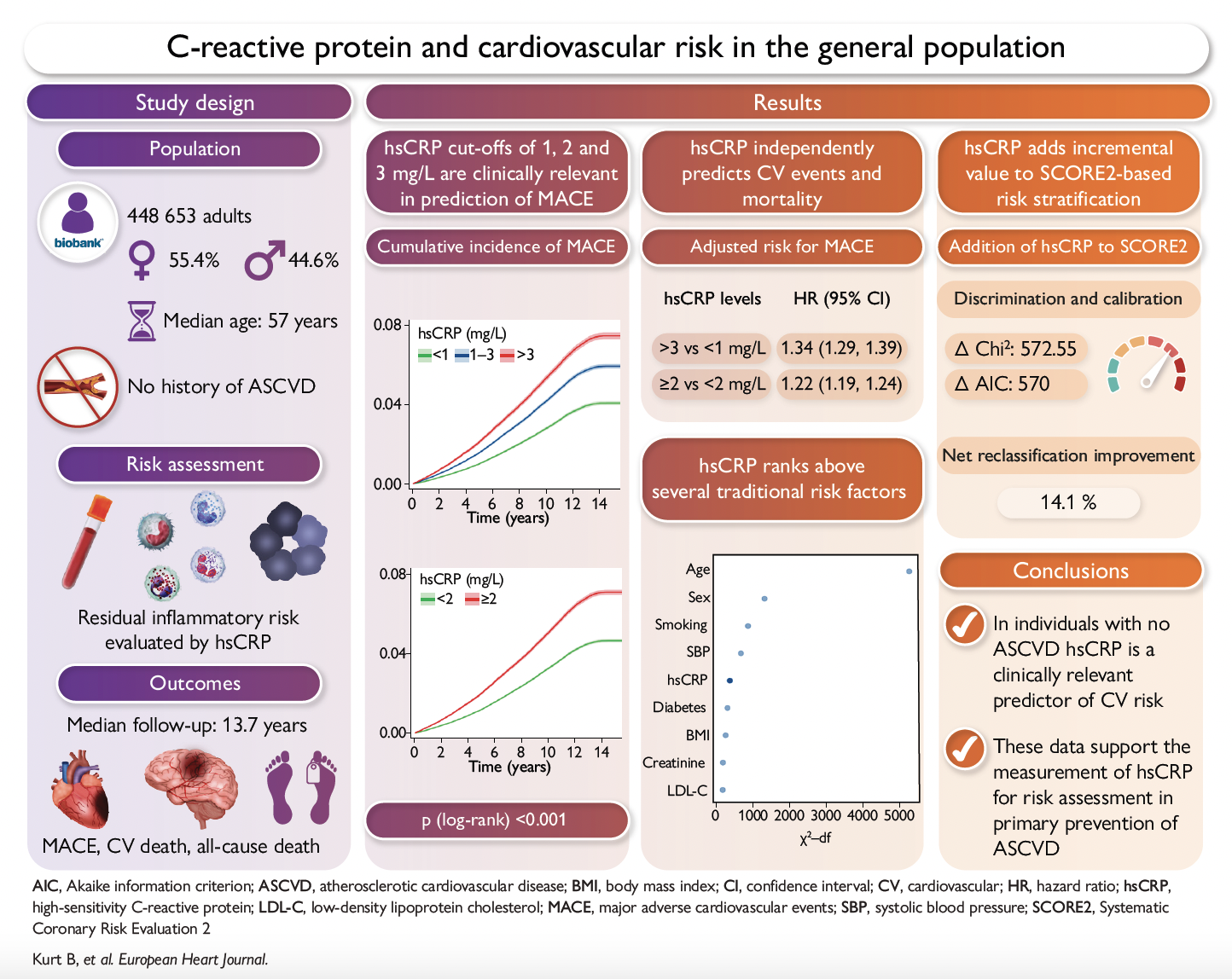
Inflammation plays a central role in the development and progression of atherosclerotic cardiovascular disease and contributes to residual cardiovascular risk beyond traditional risk factors. In this context, an international expert consortium, including Prof. Thomas F. Lüscher and Dr. Florian A. Wenzl, studied the clinical relevance of high-sensitivity C-reactive protein (hsCRP), a marker of systemic inflammation, in a large population-based cohort.
The study, recently published in the European Heart Journal, analysed 448 653 UK Biobank participants without known atherosclerotic cardiovascular disease. Elevated hsCRP levels were consistently associated with a higher risk of major adverse cardiovascular events, cardiovascular death, and all-cause mortality, showing a clear dose–response relationship. hsCRP levels were also stable over time and provided prognostic information beyond conventional risk factors, improving risk classification when added to established models such as SCORE2. These findings support hsCRP as a robust and clinically relevant biomarker for identifying individuals at residual cardiovascular risk in primary prevention settings.
Learn more about the study here